

In sports cards, a parallel is a version of a base card with the same photo, design and card number but a different color, finish or pattern, and it’s usually printed in smaller numbers. That scarcity makes parallels more collectible, and usually more valuable, than the base card. Modern sets often have dozens of parallels for every base card.
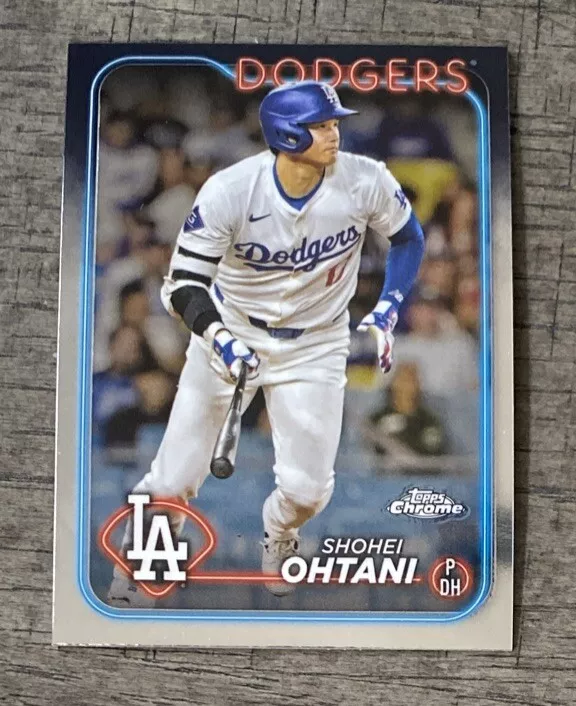
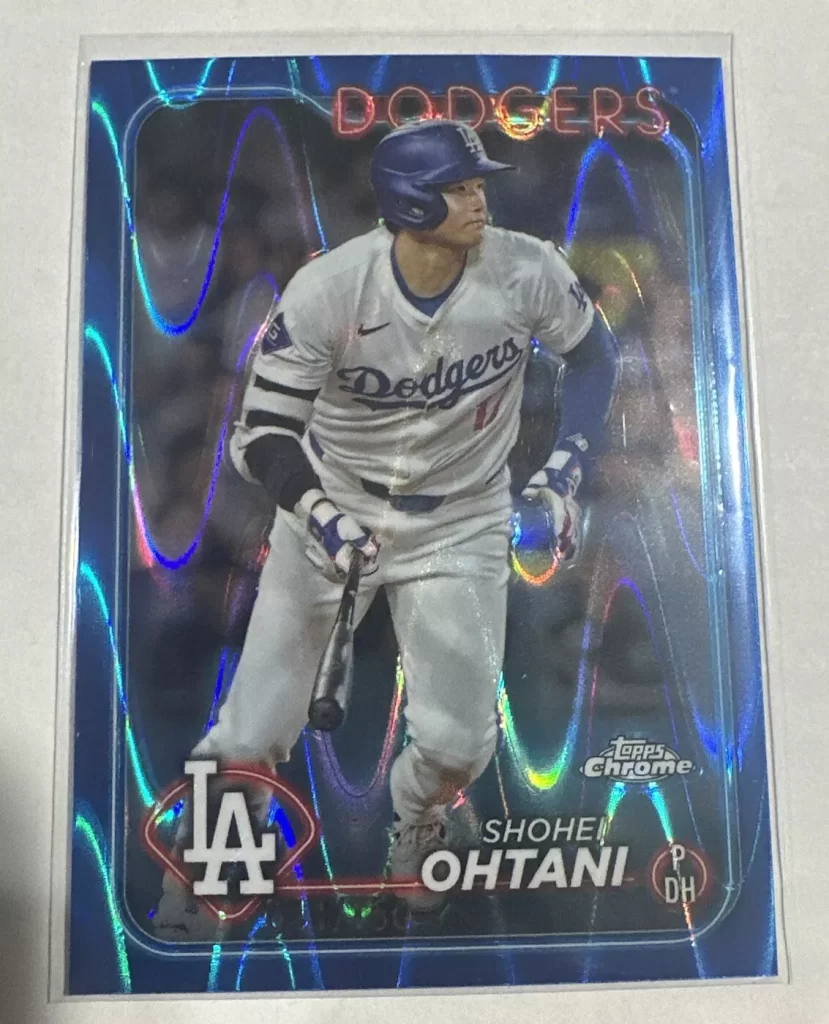
The two Ohtani cards above are both card #1 in 2024 Topps Chrome. The second is the Blue RayWave Refractor parallel, serial numbered to 150 copies.
Types of parallels
- Color Parallels: Sports cards with borders or designs in colors like gold, red, blue, etc. They often indicate different levels of rarity.
- Foil or Refractor Parallels: Cards with a shiny or reflective finish. In Topps Chrome and Bowman Chrome these are called refractors; Panini calls its version Prizms.
- Numbered Parallels: Parallels stamped with a serial number, like 12/150, so you know exactly how many exist. The rarest is the 1/1 (one of one).
- Patterned Parallels: Cards with unique designs, like cracked ice, camouflage, or prism effects.
Not every rare parallel is numbered. Some are unnumbered short prints (SP) or super short prints (SSP), where the odds tell you they’re scarce but the print run isn’t printed on the card.
To give a sense of scale, the base set in 2025-26 Topps Chrome Basketball has more than 40 parallels. The numbered ones step down from Magenta /399 through Blue /150, Gold /50, Orange /25, Black /10 and Red /5, down to a single SuperFractor 1/1.
Parallel vs. insert
A parallel is the base card in a different finish. An insert is a different card, with its own design and its own card numbers (usually with a letter prefix). Inserts can have their own parallels too, so you’ll see things like a gold refractor version of an insert.
How to tell if a card is a parallel
- Compare it with the base card. Same photo and card number, different color or finish: it’s a parallel.
- Look for a serial number. A stamped number like 045/150, usually on the back, means a numbered parallel.
- Tilt it in the light. Refractors and foil parallels shine or show a rainbow effect that the base card doesn’t. Some refractors, mostly older ones, also have “Refractor” printed on the back near the card number.
- Check the checklist. Checklist sites list every parallel for a product with its print run and odds, so you can match yours by color and pattern.
Rainbow collecting
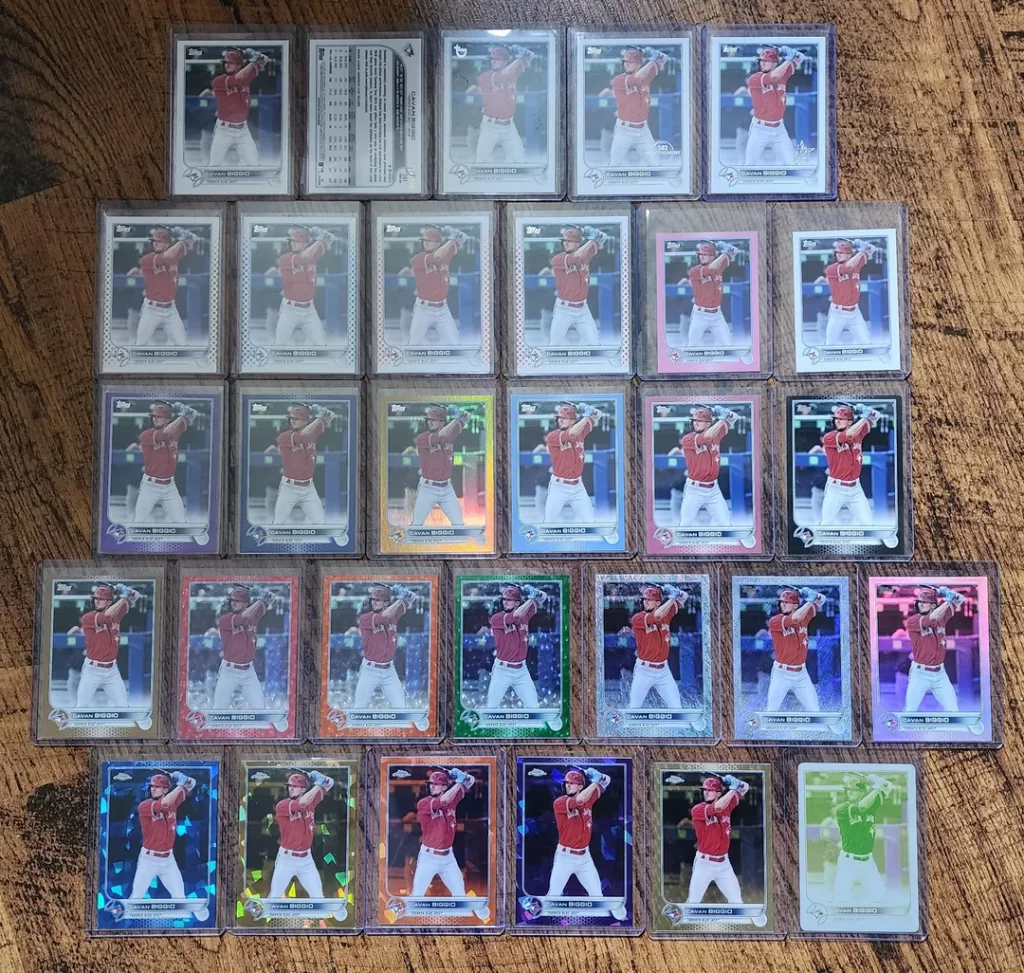
Parallels are often chased by collectors trying to complete a “rainbow,” which means owning every parallel of one card. With 40-plus versions of a single card in some products, and a 1/1 at the top, very few rainbows ever get finished.
FAQ
Are parallel cards worth anything?
Usually more than the base card, but how much depends on the player and the print run. A /5 parallel of a star rookie can be worth many times a /399 of the same card, while a low-numbered parallel of a bench player may still sell cheaply. Look up recent sales (comps) of the exact parallel rather than the base card.
What does parallel mean in Topps?
The same as anywhere else: a variation of a base card. In Topps Chrome products most parallels are refractors in different colors and patterns, topped by the SuperFractor 1/1. In paper products like flagship Topps, parallels are usually colored borders or foil versions.
Is a parallel a hit?
Only the rare ones. A low-numbered parallel (say /25 or less) of a good player counts as a hit to most collectors. The common, higher-numbered parallels don’t.
Not sure which version you have? Look up the CMP code on the back of your Topps card.

