

In sports cards, an insert is a card from a themed subset that’s mixed into packs alongside the base cards but has its own design, name and card numbers. Inserts are usually rarer than base cards, and collectors chase them for their designs as much as for the players.
Inserts are listed on the product’s checklist alongside the base set, but with their own numbering format. If a card is numbered with a mix of letters and numbers, like HA-7, it’s almost always an insert. Base cards usually carry a plain number.
Insert vs. parallel
These two get mixed up all the time. A parallel is the base card again, with the same photo, design and number, in a different color or finish. An insert is a different card altogether, with its own design and checklist.
They also overlap: many insert sets have their own parallels, such as a gold or refractor version of the insert, sometimes serial numbered.
Types of inserts
Strictly speaking, anything that isn’t a base card gets “inserted” into packs, which is why older guides include autographs and memorabilia (relic cards) under inserts. In everyday hobby talk, though, autographs and relics are called hits, and “insert” means the themed, non-autographed subsets. Those come in a few flavors:
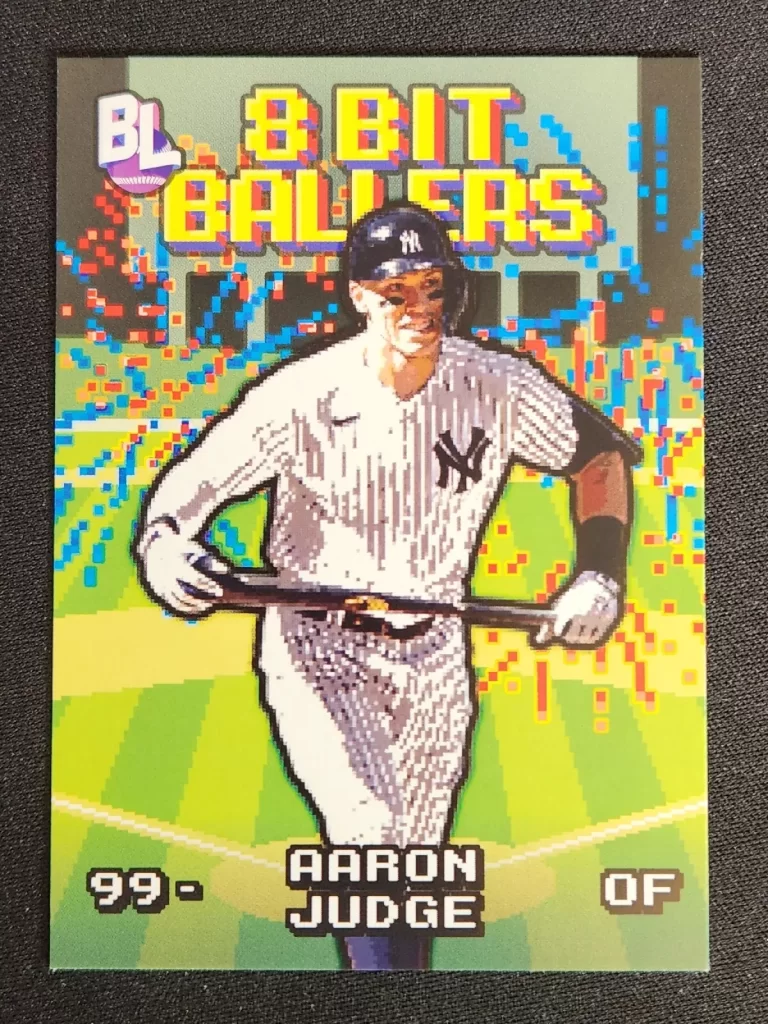
- Theme inserts, built around an idea like award winners, All-Stars, rookies or a pop-culture look (8 Bit Ballers is a video-game theme).
- Die-cut inserts, cut into unusual shapes.
- Short print inserts, printed in much smaller numbers than the rest. The rarer ones are called SSPs (super short prints), and inserts that fall about once per sealed case are called case hits.

Home Field Advantage shows how rare an insert can be. In 2022 Topps Series 1 it fell about once every 228 hobby packs, or roughly one in every ten hobby boxes.
Inserts are usually flashier than base cards and can come in unusual shapes (die-cut cards), finishes (foil or chrome) and colors. Current Topps Chrome releases lean hard on them: 2025-26 Topps Chrome Basketball has SSP insert sets like Helix and Glass Canvas.
How to tell if your card is an insert
- Check the card number on the back. A letter prefix (HA-7) points to an insert.
- Compare it with the base card. If the design is completely different from the base set, it’s an insert. If it’s the base design in another color, it’s a parallel.
- Look it up on the checklist. The product checklist lists every insert set, and the odds sheet shows how often each one falls.
FAQ
Are insert cards worth anything?
Most common inserts, the ones that fall a few times per box, don’t sell for much unless they feature a star or a hot rookie. Short-printed and SSP inserts are a different story and can be worth far more than the base card. Check recent sales (comps) for the exact card before you price one.
Is an insert card a hit?
Usually not. A regular insert is a nice pull, not a hit. Rare SSP inserts and case hits are the exception and often get called hits even though they have no autograph or memorabilia.
Can an insert be a parallel?
An insert can have parallels. The regular version of the insert is the “base” of that insert set, and colored or numbered versions of it are insert parallels.
Not sure which version you have? Look up the CMP code on the back of your Topps card.

